


9 Ways Cocktails Are Made (And Why Technique Matters)


Most people order a cocktail based on what's in it. Bartenders, on the other hand, think about how it's made. That distinction matters more than you might think. Two drinks can contain nearly identical ingredients yet taste and feel completely different depending on the technique used to prepare them.
A shaken Martini has a brighter, airier texture than a stirred one. Roll a Bloody Mary instead of shaking it, and you'll get a silkier, less frothy drink.
These techniques aren't just for show. Every method is designed to achieve the right balance of chilling, dilution, aeration, and texture; and many have fascinating histories dating back more than a century.
Here are the nine ways cocktails are made, and why each one deserves a place behind the bar.
1. Shake
If there's one cocktail-making technique everyone recognizes, it's shaking.

A cocktail shaker rapidly chills ingredients while introducing the perfect amount of dilution from melting ice. Just as importantly, shaking blends ingredients that don't naturally mix, such as citrus juice, syrups, cream, or egg whites, while adding tiny air bubbles that create a lighter mouthfeel.
You'll see it used for classics like the Whiskey Sour, Margarita, Daiquiri, and Ramos Gin Fizz (which famously requires a long shake, sometimes up to 12 minutes!).
Did you know?
The first patented cocktail shaker appeared in the United States in the 1870s, but historians have found evidence of people using closed vessels to mix drinks as far back as ancient Mesopotamia and South America. The sleek three-piece cobbler shaker and two-piece Boston shaker we know today only became popular during the Golden Age of Cocktails in the late 19th century.
2. Stir
Stirring is the quieter, more elegant sibling of shaking.
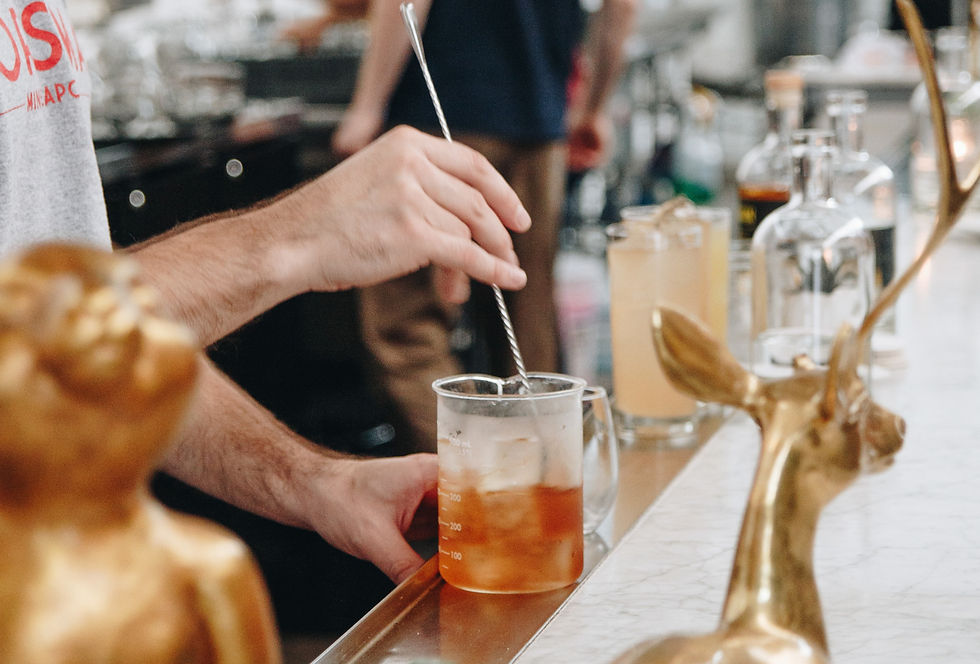
Rather than aerating the drink, stirring gently chills and dilutes while keeping it crystal clear. That's why spirit-forward cocktails rely on this technique: the goal is refinement, not froth.
A well-stirred cocktail should feel silky, balanced, and cold without becoming watery.
You'll most often see it used for the Martini, Manhattan, Negroni, and Old Fashioned.
Did you know?
The phrase "stirred, not shaken" became famous thanks to James Bond, but bartenders had been stirring spirit-only cocktails for nearly a century before 007 ordered his Martini (which is all spirits). Ironically, many cocktail purists still disagree with Bond's preference.
3. Build
Sometimes the simplest technique is the smartest one.

Building means adding each ingredient directly into the serving glass. Since many built drinks are topped with soda, tonic, or ginger beer, avoiding a shaker helps preserve carbonation.
Afterward, the bartender may give the drink a gentle stir—or simply lift the ice with a bar spoon—to integrate the ingredients.
You'll see it used for the Gin & Tonic, Moscow Mule, Cuba Libre, and Dark 'n' Stormy.
Did you know?
The highball became one of the world's most popular cocktails largely because of the build method. As whisky and soda gained popularity in the late 1800s, bartenders could make drinks quickly without sacrificing quality, giving it a major advantage in busy bars that still holds true today.
4. Blend
Frozen cocktails wouldn't exist without the blender.

Blending creates a smooth, icy consistency that shaking simply can't achieve. Here, the ice becomes part of the drink itself, giving frozen cocktails their signature creamy texture. Getting it right is surprisingly technical: too much ice and the drink becomes watery; too little and it lacks body.
Think Frozen Piña Coladas, Frozen Daiquiris, and Frozen Margaritas.
Did you know?
The electric blender helped transform tropical cocktails in the 1950s. Combined with the rise of tiki bars and Caribbean tourism, frozen drinks became synonymous with vacation culture—a reputation they still enjoy today.
5. Roll
Rolling is one of bartending's best-kept secrets.
Instead of shaking, the drink is poured gently back and forth between two tins several times. This mixes ingredients while minimizing aeration, making it ideal for savory or delicate cocktails. The result is a smoother, rounder texture without excessive foam.
The Bloody Mary and Red Snapper are two of the best-known examples.
Did you know?
Many bartenders prefer rolling tomato-based cocktails because shaking can overwork the tomato juice, making it foamy and changing its texture. Rolling keeps everything integrated while preserving a velvety mouthfeel.
6. Throw
Throwing is equal parts bartending technique and performance.
The drink is poured between two vessels held a considerable distance apart, stretching through the air before landing in the receiving tin. The process gently aerates the cocktail while chilling and mixing it. The resulting texture falls somewhere between stirring and shaking.
You'll occasionally see thrown Martinis, Bamboo cocktails, or Sherry-based drinks.
Did you know?
Throwing is believed to have originated in Spain, particularly among bartenders serving Sherry. The technique has since become popular in cocktail bars around the world. If you're in Malaysia or Singapore, the movement may remind you of making teh tarik, where tea is repeatedly poured between two cups to cool and aerate the drink.
7. Swizzle
Long before electric blenders and cocktail shakers, there was the swizzle.
Originating in the Caribbean, bartenders used branches from the native Quararibea turbinata tree (known as the swizzle stick) to rapidly spin drinks packed with crushed ice.
Today, most bars use a bar spoon or a modern swizzle stick to achieve the same effect.
The Queen's Park Swizzle and Rum Swizzle remain two iconic examples.
Did you know?
A properly swizzled drink often develops a layer of frost on the outside of the glass; a sign that the cocktail has reached the ideal temperature.
8. Muddle
Technically, muddling isn't a mixing method (it's a preparation technique) but it's fundamental to many classic cocktails.

Using a muddler, bartenders gently press herbs, fruit, or sugar to release essential oils, juice, and aroma before adding the remaining ingredients. The keyword is gently. Over-muddling mint, for example, can release bitter compounds from the leaves, turning a refreshing Mojito into a grassy one.
You'll also find muddling in the Caipirinha, Mint Julep, and sometimes the Old Fashioned.
Did you know?
Professional bartenders rarely "smash" mint the way it's often portrayed in movies. A light press is all it takes to release the fragrant oils without extracting unwanted bitterness.
9. Layer

Layering is where bartending meets science and art.
Liquids have different densities depending on their sugar and alcohol content. By carefully pouring ingredients over the back of a spoon, bartenders can create distinct layers that remain separated. The technique is visually stunning, but it also changes the way flavors are experienced as you drink.
Examples include the B-52, the New York Sour with its red wine float, and elaborate pousse-cafés.
Did you know?
Layered drinks became hugely fashionable during the late 1800s, when colorful pousse-cafés were considered the ultimate test of a bartender's precision. Some featured more than half a dozen perfectly stacked layers.
More Than Just Showmanship
From the outside, these techniques can look like tradition—or even theatrics. In reality, every movement has a purpose.
Shaking creates texture. Stirring preserves clarity. Building protects carbonation. Rolling keeps delicate ingredients smooth. Throwing gently aerates. Swizzling chills tropical drinks to perfection. Muddling unlocks fresh aromas, while layering demonstrates both chemistry and craftsmanship.
The next time you order a cocktail, don't just watch what goes into the glass. Watch how it gets there. Chances are, the technique behind the bar is shaping your drink just as much as the ingredients inside it.


